Table Of Content
Research shows that the best ideas come from having a greater amount and diversity of ideas. At VR / AR company Talespin, based in LA, product manager Remmelt Blessinga helped design a virtual human named Barry that teaches managers how to compassionately let employees go when necessary. In the Barry simulation, users will witness a VR person argue, express emotions and ask questions all while roleplaying at being fired.
Empathetic Innovation
Here’s what each step of the process means and how you can implement it to create products and services people love. Saptharishi’s remarks set the tone for one of the industry’s most comprehensive technology events, designed to train and connect public safety personnel from across North America. Nearly 300 training and roadmap sessions and 35 hands-on labs reinforce how technology can reduce complexity, helping agencies do their jobs faster and more efficiently as they keep their communities safe. Most people feel apprehensive when encountering a new situation, but knowing what to expect can help. As Home and Community-Based Services (HCBS) assessment professionals, we gather accurate, relevant, and meaningful information about each person’s support needs and goals. Accuracy is key because this information helps states deliver the right type and intensity of services and in the right settings, that align with an individual’s unique personal constellation of goals, preferences, and needs.
What is human-centered design & how to get started
"We don't need to overcomplicate details for the younger generation. Especially in Japan, many people dress very simply – these days lots of people wear one type of T-shirt." At the launch of the exhibition, we caught up with Koichi Suga, General Manager of Lexus Design Division, to learn more about what makes Lexus's approach to vehicle design unique – and how that approach has changed over the years. "It used to be that car design was very complicated," he told Creative Bloq.
Reimagining the NICU: a human-centered design approach to healthcare innovation Journal of Perinatology - Nature.com
Reimagining the NICU: a human-centered design approach to healthcare innovation Journal of Perinatology.
Posted: Tue, 12 Dec 2023 08:00:00 GMT [source]
What is Human-Centered Design? 3 Phases, 4 Principles, and a Call-to-Action
The way you define the problem is important and should be phrased in a way that allows for creativity in how it could be addressed. While the Human-Centered Design process has many forms, the model we use at DC Design has 5 key phases. While you need a foundational knowledge of individual UX design and product management principles, you can’t rely on one single strategy. Hotjar makes it easy to get product experience insights that tell you exactly how users feel—no more guessing and hoping for the best. Learn how to get users clicking and tapping with these 7 essential principles of conversion-centered design and our tips on how to apply them.
It means a critical innovation tool, one that’s common in the private sector but still new to government, is percolating in your city. Designers integrate user feedback, conduct extensive user research, iterate designs based on real-world use, and collaborate across disciplines to ensure the design meets user needs. Every product competes on the metric of positive or negative user experience. However, the key to competitive victory amongst players like Blockbuster lies in the simple recognition that a positive user experience was the centerpiece of the industry transformation.
Students can easily navigate Canvas, accessing the resources and content they need to learn. In addition, with Canvas customization, educators can personalize learning paths, tailoring academic content when needed. There are several user-centered evaluation methods that you can use to evaluate designs. User based testing (i.e., usability testing) and the use of standards and guidelines as an inspection method can be used and does not require end users. Here’s how to apply the main principles of this approach to your web projects. Keeping the wider social ecosystem in mind when designing the site allows you to build websites that are people-first rather than tech-first.
Disciples pay tribute to pioneer of human-centered architecture KU News - The University of Kansas
Disciples pay tribute to pioneer of human-centered architecture KU News.
Posted: Mon, 08 Apr 2024 16:11:41 GMT [source]
Overall, implementation should lead to continuous adaptation and growth of a solution in response to needs, market trends, and user behaviors. It’s often easier to quickly implement changes in software compared to hardware. Software designers that take a human-centered approach are able to incorporate user feedback with every new release cycle.
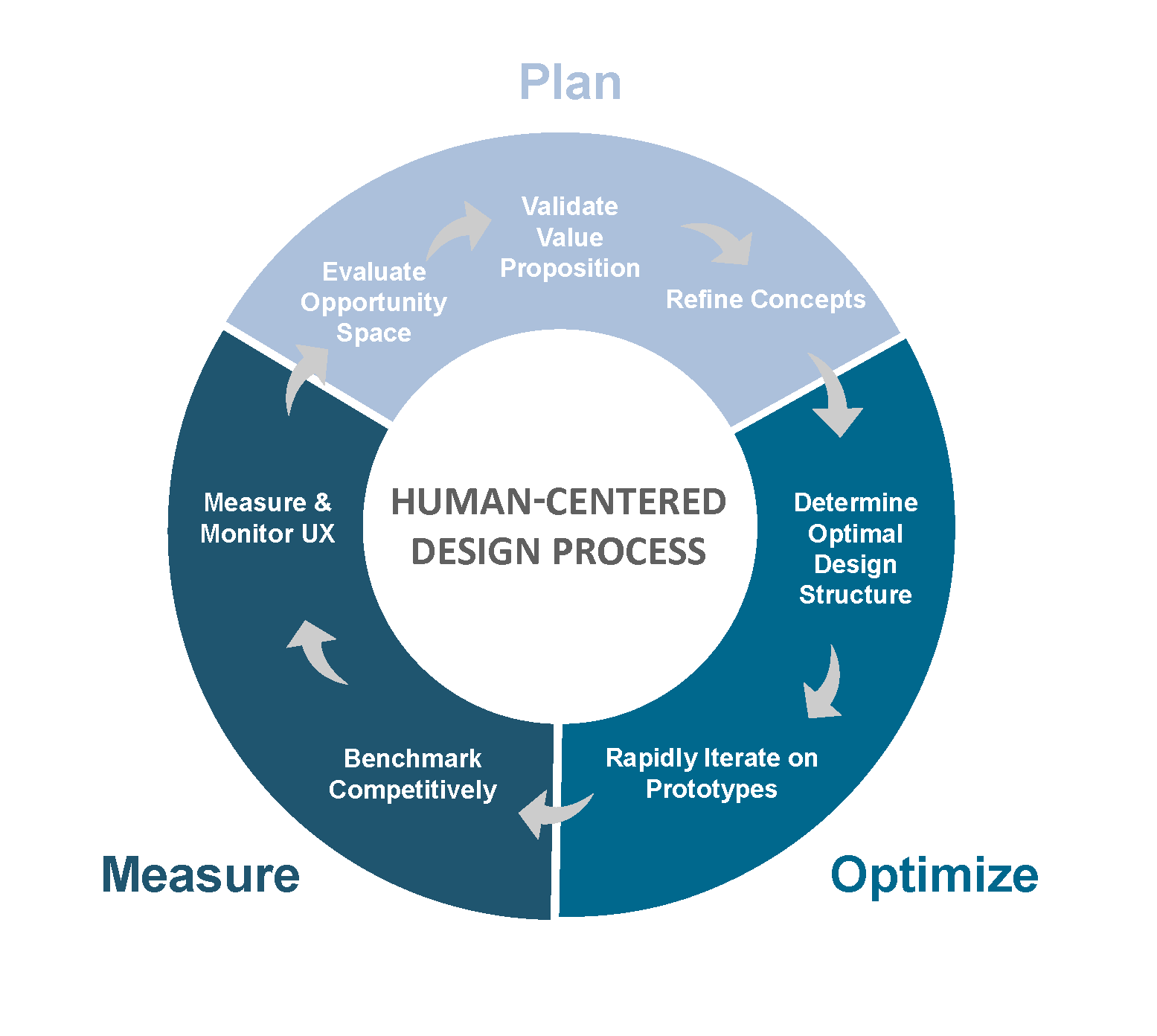
This article is a field guide to implementing a human-centered design process. Entire books are written on the subject, but this is a great launching point for grasping the essentials and understanding why HCD is so important. Human-centered design (HCD) is a design and management framework that develops solutions to problems by involving the human perspective in all steps of problem-solving. In contrast, user-centered design focuses more on the production of interactive technology designed around the user’s physical attributes rather than social problem solving. This approach enhances effectiveness and efficiency, improves human well-being, user satisfaction, accessibility and sustainability; and counteracts possible adverse effects of use on human health, safety and performance.
HCD’s participatory design approach taps end-user input early and often, inviting users to co-design, test, and fine-tune UX design solutions. This includes understanding their needs, goals, pain points, and emotions beyond their interactions with the product. Doing so leads to more intuitive and personalized user experiences, and products or services that genuinely enrich users’ lives. Designers put ideas into action by creating low-cost experiments to test them. These experiments or prototypes can be created for physical products, virtual interfaces, processes, or systems. In any of these situations, the goal is to create something you can test with those who live with the problem in order to see if it works.
That’s why HCD’s best practice is to quickly build and test a series of possible solutions in the form of prototypes. This helps identify problems early and saves considerable resources down the line. Like user-centered design (UCD), HCD involves listening carefully to the people that your product will serve throughout the whole design process. But while UCD focuses on the end user in isolation, HCD zooms out even further to consider how the product will affect people’s daily lives, families, and communities. Humanity-centered design is a practice where designers focus on people’s needs not as individuals but as societies with complex, deep-rooted problems.
Lean on research methods such as user interviews to uncover user likes and dislikes, thoughts, and feelings. “You can automate a ton of stuff,” says Shyvee Shi, Product Lead at LinkedIn. “But the human needs to be in the driver seat.” To put her wisdom to work for your product, try her generative AI framework for the Figma community. An important distinction between human-centered design and any other form of design is that human-centered design is not just about aesthetics, and is not always designing for interfaces.
This increases the student's involvement in the decision-making process, amplifying their voices. Next comes a synthesis phase, where designers take the research findings and draw connections between different experiences they’ve heard. This is part of understanding the problem or situation at a very deep level in order to surface the underlying forces at work. Designers then take the results of that synthesis and think creatively, or “ideate,” about what potential solutions could be. This is where they can challenge the role of government and develop ideas that redefine what it can do. Overall, human-centered design (HCD) has become the central process through which designers create and innovate.

IDEO, headquartered in Palo Alto, California, is credited as being the first design agency to truly monetize the concept of human-centered design, apply it to technology and bring it into the mainstream. Use rapid prototyping to create interactive mock-ups, so that you can test and validate your design concept. Invite input from key stakeholders and tersters, then use their feedback to tweak your prototype.
Human-centered design focuses on the person and their wants, needs, and feelings. With its focus on people and their needs, HCD can help you create even more engaging and useful experiences for website visitors. See why humanity-centered design is key to designing the best solutions to complex global problems. A prototype is a quick sketch or crude model of an idea — a low-cost, low-stakes way of making an abstract idea real. Designers then test out those prototypes with citizens, in order to get feedback so that the idea can be improved rapidly.This is where cities can go from merely engaging citizens to co-creating solutions with them.
A key element of all product development cycles is the potential for constant improvements through redesign. After thoroughly understanding the problem, a design team will move on to build prototypes or mock-ups of proposed solutions. This can involve creating either low-fidelity or high-fidelity prototypes, depending on the complexity of the solution. As teams come to understand the problem effectively, they should start generating ideas for solutions to the problem or opportunity identified in the define stage.




No comments:
Post a Comment